Introduction
The UK market for cannabis‑infused sweets is changing fast. This guide looks at the main formats, focusing on texture, dosing and user experience, not promotion. When category labels are used below, they refer to product types like THC gummies UK for comparison only.
Terms are often used loosely in reports and shops. For a neutral definition of edibles and how they differ from other delivery methods, see the Cannabis edible overview. It provides the background for this article. That context helps compare formats such as THC gummies UK across categories.
Market participants
Manufacturers fall into three groups: specialist confectioners, craft kitchens and licensed producers. Confectioners lead on texture, offering ranges such as THC gummies UK and THC chocolates UK. Craft kitchens focus on THC baked goods and small bespoke batches. In trade audits, THC gummies UK often anchor sampling plans because unit counts and pricing are widely standardised.
Retailers and regulators enforce serving sizes and labelling. Their interaction with producers shapes which formats grow and how potency and safety are presented.
Key factors
Clear dosing is central to safety and market credibility. Consistent milligram labels per unit across formats such as THC gummies UK, THC chocolates UK and hard sweets cut the risk of accidental overconsumption and help comparisons.
Texture affects appeal and dosing. It shapes perceived onset, portioning and preferences between soft chews and hard sweets. For edible texture comparisons, gels, caramels and brittles influence bite, melt and perceived potency cues.
Manufacturing control drives consistency. Baked goods and novelty items often vary more in potency than factory‑made drinks and shots, where volume‑based dosing is easier to standardize. Relative to THC gummies UK, liquids may show less unit‑to‑unit variance when homogenized correctly.
Shelf life and transport matter. Hard sweets and chocolates keep longer and travel better than chews, taffy or baked goods, which need more care.
Match scenario
Scenario 1: Everyday user seeking predictability. Gummies and chocolates offer discreet, pre‑dosed pieces with familiar rituals, reducing dosing surprises. In many UK listings, THC gummies UK are the default benchmark for clarity of dose and portion count.
Scenario 2: Culinary‑first consumer. More likely to choose baked goods or novelty confectionery. These emphasize flavour and texture but need clear serving guidance to avoid dosing confusion.
Scenario 3: On‑the‑go or functional user. Drinks and shots may feel faster for some due to gastric processing, while chews are portable and easy to portion.
Scenario 4: Public settings and gifting. Chocolates and hard sweets are discreet and socially acceptable. Packaging and clear milligram labels are vital to prevent accidental use, especially by children.
Format-by-format breakdown
THC gummies UK: Standard‑setter for consistency. Easy to dose; textures from soft gel to firmer chews suit many tastes; scalable manufacturing supports tight potency control.
THC chocolates UK: Often positioned as premium. Fat‑based matrices affect cannabinoid dispersion; they mask taste well but need attention to melt points and child‑resistant packs. Many buyers weigh THC chocolates UK against THC gummies UK on melt risk versus portability.
THC baked goods: Highly flexible culinarily, but batch variability is the main risk. Cannabinoids bind to fats; without thorough mixing and testing, potency hotspots can occur.
THC hard sweets: Long shelf life and clear portions. Dosed per piece; longer sucking time minimally changes pharmacokinetics versus swallowing, so onset messaging must stay accurate.
THC drinks and shots: Liquids enable quick, scalable standardization. At‑home measurement can be tricky, and poor labelling risks confusion with non‑infused drinks.
THC chews and taffy: Texture‑led appeal; chew time can affect perceived onset. They may stick to teeth and need clear guidance on single‑portion use to prevent partial or shared dosing errors.
Novelty cannabis confectionery: Novel shapes draw interest but raise the risk of accidental ingestion. Novelty must not override clear serving formats and warnings.
Operational considerations and safety
Lab testing and batch traceability are essential across all formats. Independent potency checks reduce risk and support responsible retail. This is especially scrutinized for baseline categories such as THC gummies UK.
Packaging should state milligrams per serving, total potency and clear serving size formats. Consistent visual cues across ranges make comparisons easier.
Retail placement and staff training matter. Staff who understand onset differences between drinks and solid edibles can advise better at the point of sale and lower misuse.
Conclusion
The UK market for cannabis sweets is diverse and still maturing. Gummies and chocolates are the most standardized, while baked goods and novelty items trade culinary flair for dosing complexity. Within this, THC gummies UK remain the reference point for unit dosing and broad availability.
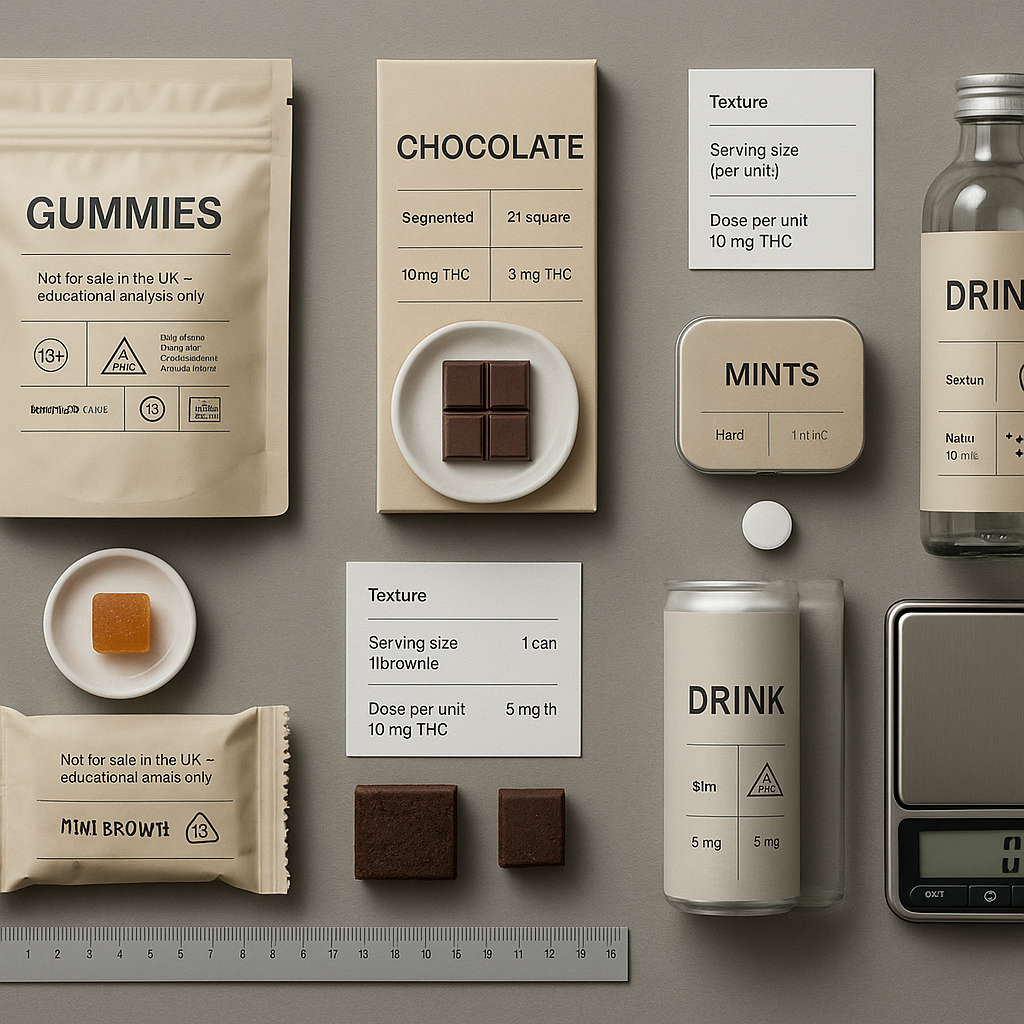
Texture and clear serving formats will decide which products win trust and regulatory acceptance. For policymakers and industry, steady progress depends on transparent dosing, rigorous testing and consistent labelling across formats. This spans all product types, from liquids to familiar anchors like THC gummies UK.